
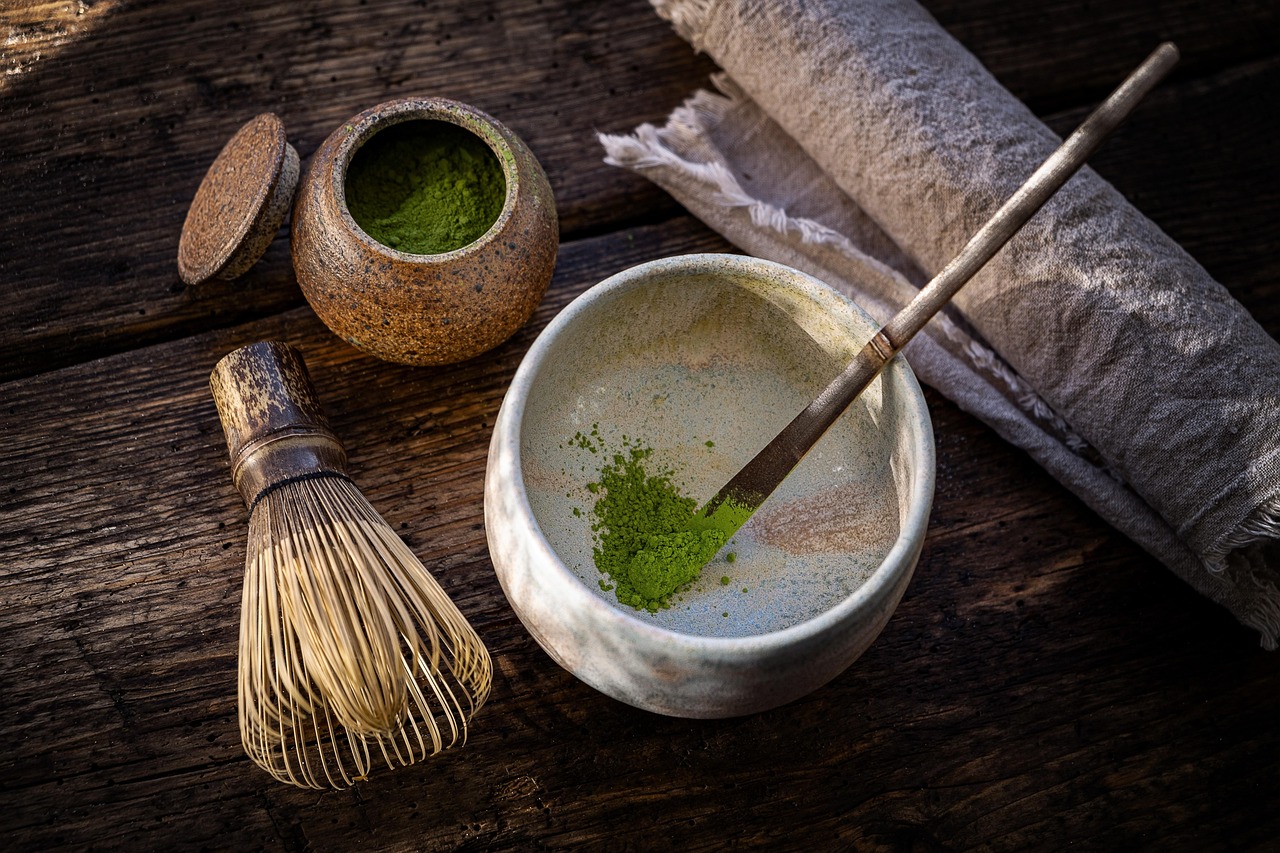
Matcha – Japanese Green Tea
Matcha, the tea used in Japanese ceremonies, is also highly prized in cooking for its subtle and refined flavour.
Matcha: a multifaceted Japanese green tea
Matcha is a powdered green tea produced in Japan with a bright green colour. This ceremonial tea is appreciated for its unrivalled flavour and health benefits. Palais des Thés takes a look at its origins, benefits and variations.
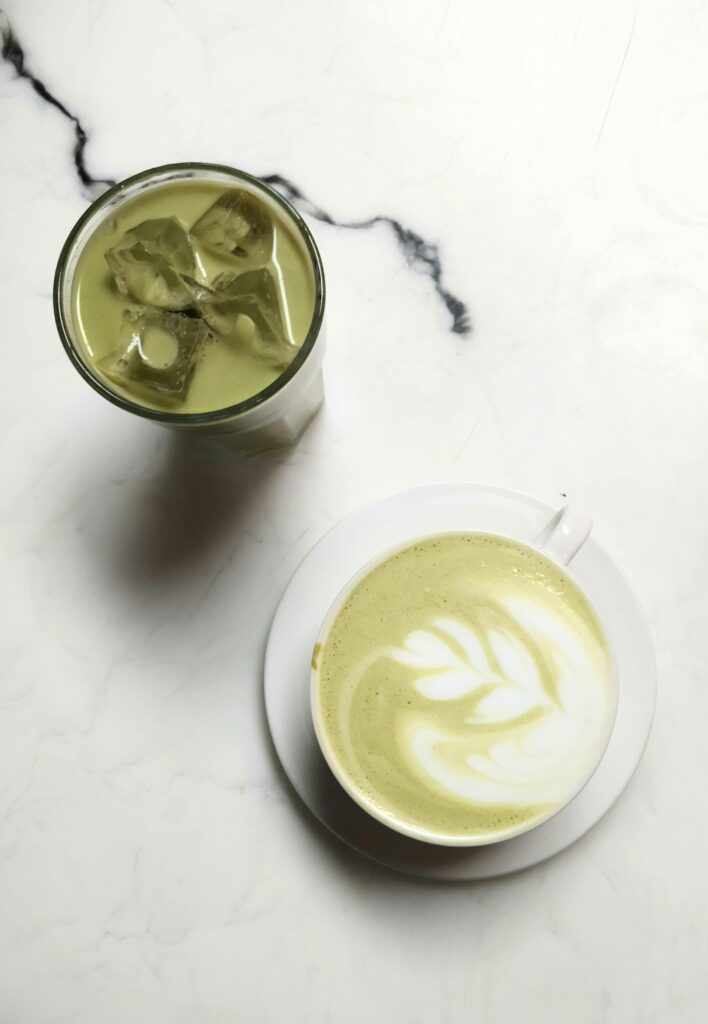
Served whisked in a bowl designed for this purpose, matcha is a beverage synonymous with tradition. The tea ceremony, which is highly codified, embodies a tasting experience that combines culture and gastronomy. Over the centuries, its history has taken on a more modern tone. Matcha as we consume it today comes in many forms: hot or cold drinks, small dishes, pastries… Round and mellow on the palate, this green tea develops vegetal notes with a beautiful umami flavour.
History and production: what is matcha tea?
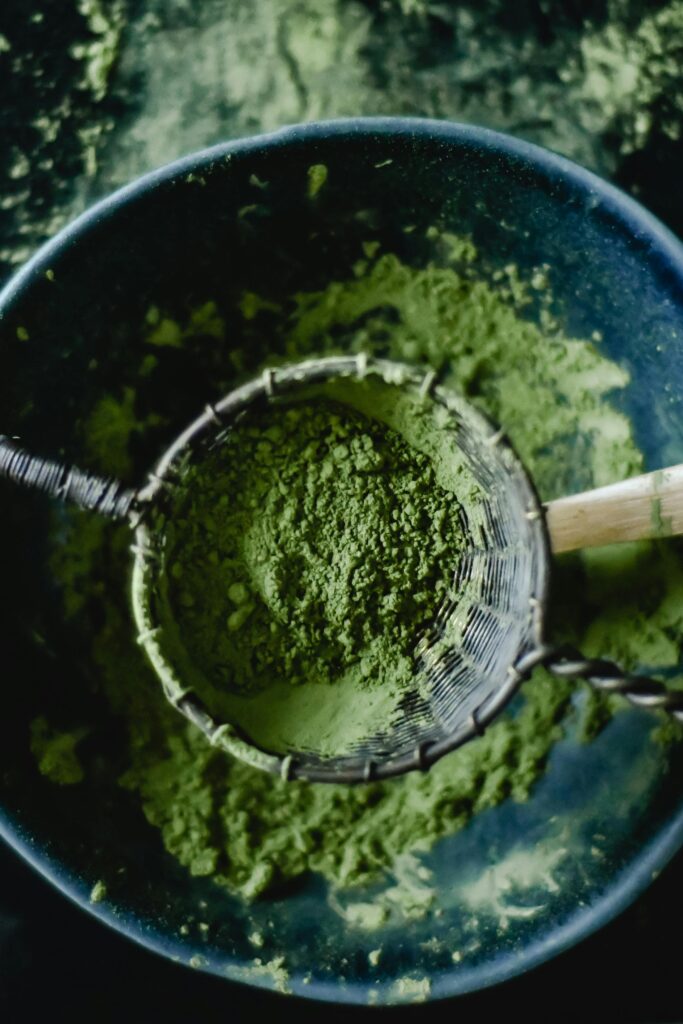
Matcha tea is a Japanese green tea produced from tencha. It is renowned for its rich nutrient content, which is the result of specific cultivation techniques. The tea plants are covered to stimulate photosynthesis and the production of elements such as theine and theanine. After harvesting, the leaves are heated with steam, dried, sorted and then ground using a stone mill. This traditional technique produces a fine green powder: matcha.
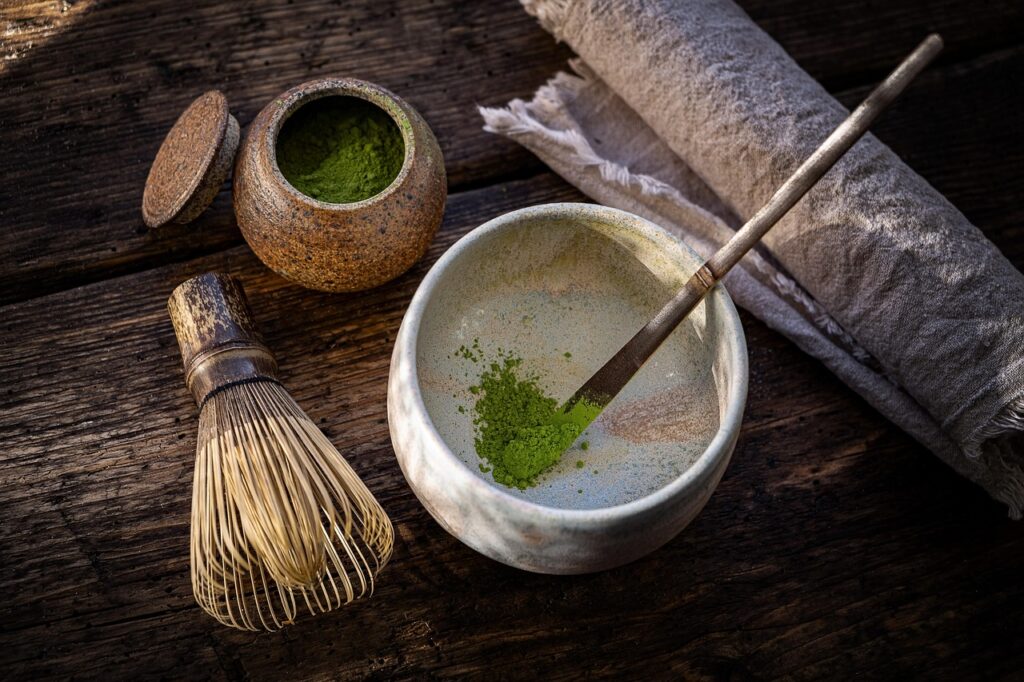
Matcha is the descendant of beaten tea. In 12th-century China, during the Song dynasty, tea was ground into powder and beaten into water, and it was in this form that it spread to Japan thanks to monks travelling to study Buddhism. They realised that tea promoted alertness and enabled them to meditate for long hours. Perhaps it was for these virtues that, from the 13th century onwards, samurai warriors also began to drink matcha. This practice remained ingrained in Japanese society, which made it one of the pillars of Cha No Yu, the tea ceremony.
When should you drink matcha tea?
It is advisable to drink matcha green tea at specific times to fully enjoy its benefits. The morning seems to be the ideal time to get energy for the whole day. Thanks to its stimulating, antioxidant and concentration-boosting properties, matcha tea unleashes all its benefits for the body when drunk in the first few hours after waking up. It may also be advisable to drink it before a workout to enjoy the invigorating properties of this green tea. However, avoid drinking it too late in the day.
Matcha owes its qualities to its high concentration of theanine, which promotes relaxation and concentration, and caffeine. A recent study reports that it is precisely this combination that makes matcha tea a beverage with exceptional properties.
How much matcha tea should you drink in a day?
It is best to consume no more than 2 to 3 cups of matcha tea per day. Compared to green tea, for example, where it is recommended not to exceed one litre per day, matcha is proven to be rich in caffeine.
